

If you are wondering what to do if your wife is not living with you, you are not alone. Nowadays, many cases are seen where the wife leaves the matrimonial home without any valid reason and refuses to return.
In such situations, the husband faces mental stress, social pressure, and legal confusion. It becomes difficult to decide what step to take, whether to take legal action in India, file RCR, or apply for divorce.
In this simple and practical guide, we will explain step-by-step what you should do and how to make your case strong.
Note: In India, marriage-related matters are mainly governed by the Hindu Marriage Act, 1955, which provides for RCR (Section 9) and Divorce (Section 13).
Table of Contents
Toggle1. Is It Desertion If Wife Leaves the House?
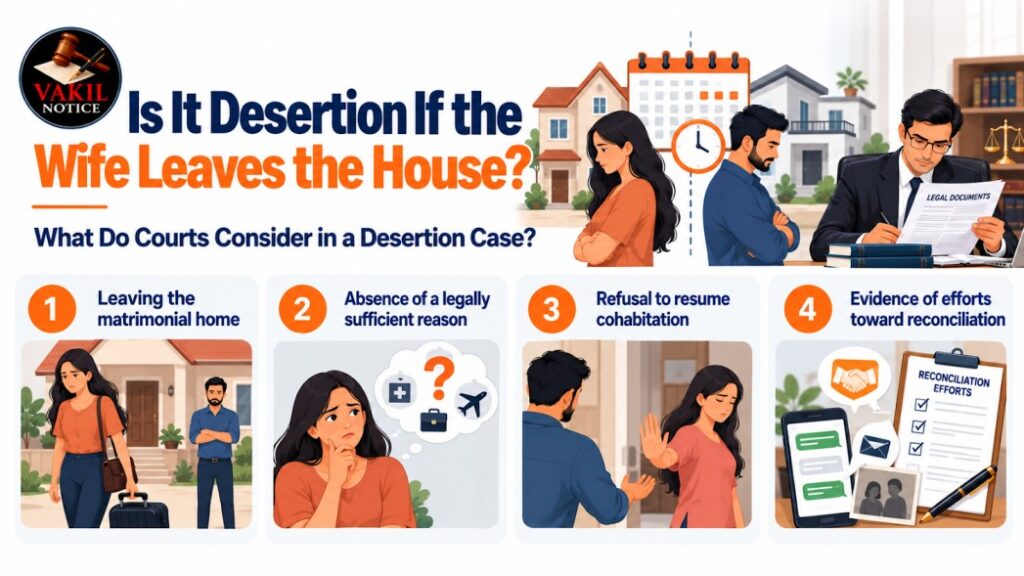
If a wife leaves the matrimonial home without any valid reason and does not return for a long time, it may be considered desertion.
H3: What Do Courts Consider in a Desertion Case?
Courts generally look at these points:
- Wife left without valid reason
- She refused to come back
- She is living separately for a long time
- Husband made efforts to bring her back
If all these are proved, it becomes a valid ground for divorce in India.
2. Effect of Long Separation
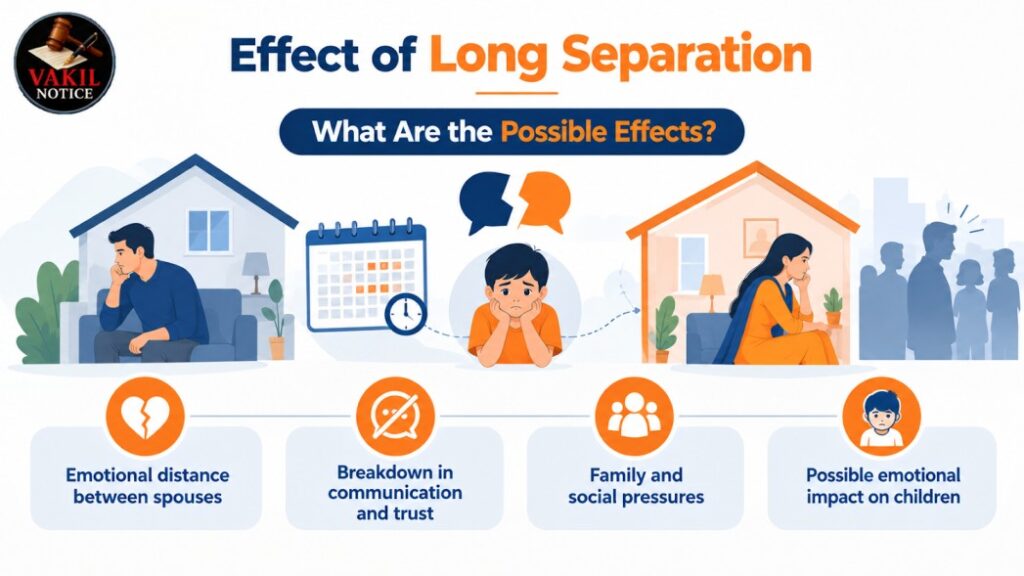
When a wife lives separately for a long time, it affects not only the couple but the entire family:
- Trust between husband and wife breaks
- Relationship becomes weak
- Social image is affected
- Children suffer emotionally and mentally
Courts also consider long separation as a sign of breakdown of marriage.
3. Why Reconciliation Efforts Are Important
Courts always check whether the husband tried to bring his wife back.
What Efforts Can a Husband Make to Bring His Wife Back?
You should try:
- Calling or messaging (phone/WhatsApp)
- Asking relatives or family members to help
- Marriage counselling
- Sending a legal notice
If you tried all this and she still did not return, your case becomes stronger.
This is the first step in legal action if wife is not living with husband in India.
4. False Allegations & Mental Cruelty

If the wife makes false allegations against the husband, it is a serious issue.
H3: Examples of False Allegations That May Amount to Mental Cruelty
Examples:
- Questioning the child’s paternity
- Allegations on character
- Defaming in society
This is called mental cruelty and is a valid ground for divorce in India.
5. Father’s Rights in Child Matters
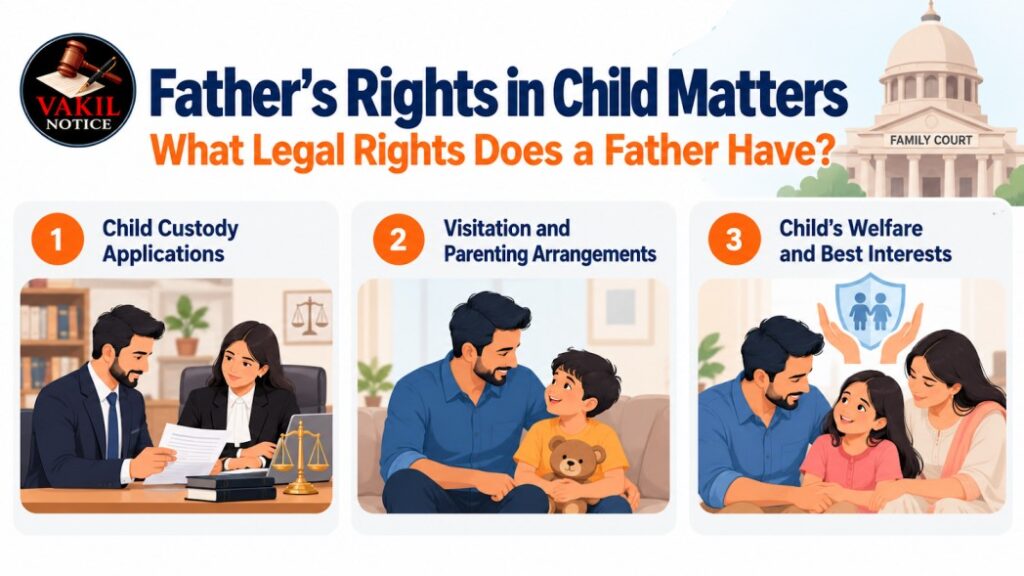
Even if the child is living with the mother, the father’s rights do not end.
What Legal Rights Does a Father Have?
A father can:
- Ask for visitation rights
- Apply for child custody
Courts always focus on the welfare of the child.
6. Maintenance Responsibility
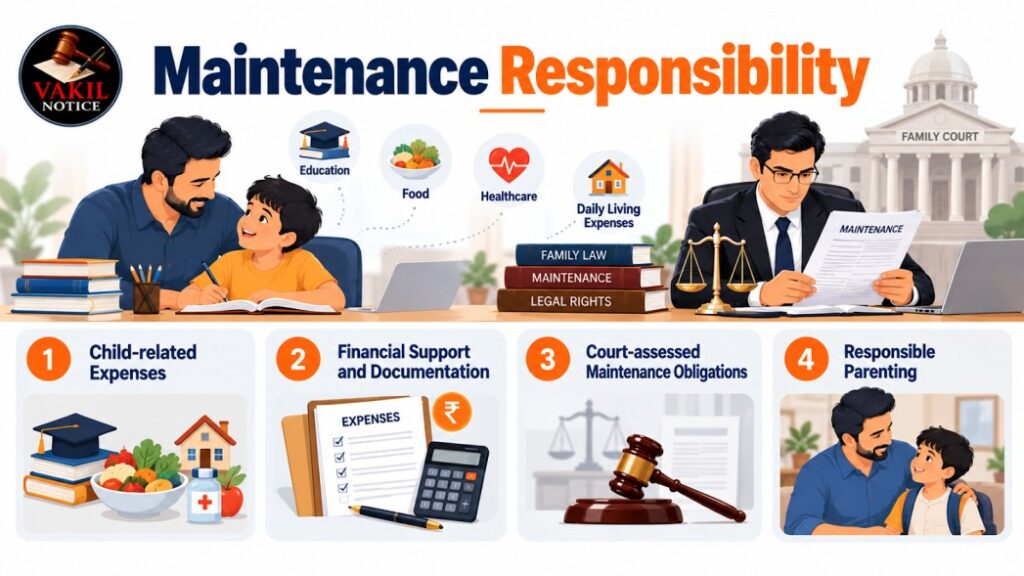
- You may have to pay for the child’s expenses
- If you willingly support the child, it creates a positive impression in court
This shows you are a responsible father and strengthens your case.
7. Legal Options Available to Husband
A. What Is RCR (Restitution of Conjugal Rights)?
RCR (Restitution of Conjugal Rights) means filing a case to bring your wife back to live with you.
If the wife is living separately without reason, the court can order her to return.
It is usually the first legal step in India.
B. Divorce
You can file for divorce if:
- Wife deserted you without reason
- She caused mental cruelty
This is one of the most common divorce procedures in India.
C. Child Custody / Visitation
You can file a case for custody or visitation rights.
8. When Wife Living Separately Is Justified
In every case, the wife is not wrong.
Valid Reasons for a Wife to Live Separately

Valid reasons may include:
- Domestic violence
- No financial support
- Continuous insult or harassment
- Problems in in-laws’ house
- Husband’s affair
- Addiction issues
- Threat to life
If these reasons are true, the wife is justified.
If not, it may be desertion.
9. Important Evidence
Evidence is very important to win the case.
Documents and Evidence That May Support Your Case
Useful proofs:
- WhatsApp chats
- Call records
- Legal notice
- Witnesses (family/neighbours)
- Photos/videos
- Medical reports
Strong evidence = strong case.
10. Step-by-Step Legal Process
- Send legal notice
- File case (RCR or Divorce)
- Court issues notice
- Mediation process
- Submit evidence
- Final arguments
- Judgment
This is the general family court process in India.
11. Time & Cost
How Long Does a Marriage or Divorce Case Take?
Time:
6 months to 3 years
H3: What Is the Cost of a Legal Notice or Court Case?
Cost:
- Legal notice: ₹1499
- Court case: Depends on advocate
12. Common Mistakes to Avoid
- Filing case without evidence
- Acting in anger (like unnecessary FIR)
- Not sending legal notice
- Posting issues on social media
- Using child as pressure tool
These mistakes can weaken your case.
13. Is Your Case Strong or Weak?
Signs of a Strong Case
- Wife left without reason
- You tried to bring her back
- You have evidence
Signs of a Weak Case
- No evidence
- No efforts made
- Wife has valid reason
14. Why Legal Notice Is Important
- Creates legal record
- Gives chance for settlement
- Becomes strong evidence in court
If your wife has left without reason, send a legal notice now and strengthen your case at just ₹1499.
Frequently Asked Questions (FAQs)
Q1. What to Do If Wife Is Not Living With Husband in India?
Try reconciliation first, then send legal notice and file RCR or divorce if needed.
Q2. What Legal Action Can Be Taken If Wife Left the Matrimonial Home?
You can file RCR or divorce in Family Court in India.
Q3. What Is RCR in Marriage?
RCR means Restitution of Conjugal Rights. If a husband or wife leaves the other spouse without a valid reason, the other spouse can file an RCR case to request the court to restore their married life. Under the Hindu Marriage Act, 1955, RCR is covered under Section 9.
Q4. How to File an RCR Case?
To file an RCR case, a person can submit an RCR petition in the Family Court or District Court having the proper jurisdiction. The petition usually includes details about the marriage, separation, and the reason for filing the case. Marriage documents and other relevant evidence may also be required.
Q5. Can RCR Force a Husband or Wife to Live Together?
No. An RCR order does not mean that the husband or wife can be physically forced to live together. The main purpose of RCR is to provide a legal way to restore the marital relationship. The court considers the facts and circumstances of each case before passing an order.
Q6. What Is Desertion in Divorce?
Leaving the matrimonial home without valid reason for a long time.
Q7. How Long Does Divorce Take in India?
Usually 6 months to 3 years.
Conclusion
If your wife is not living with you, do not panic.
- Understand the reason
- Try to resolve the issue
- Collect proper evidence
- Take legal action carefully
Taking the right legal step at the right time can decide the outcome of your case.
Need Legal Help?
Vakil Notice – Legal Notice Service (₹1499)
- Service across India
- Notice via WhatsApp + Email
- Draft within 24 hours
Contact Now
Share Your Problem
If you are facing a similar issue, share your situation in the comments.
We will try to guide you based on your case.
Your experience may help others too.
Disclaimer
This information is for general awareness only. Every case is different, so consult a lawyer for proper advice.